Skip to content
AshburnhamLock ExpertsOpen 24/7 (249) 494-7410
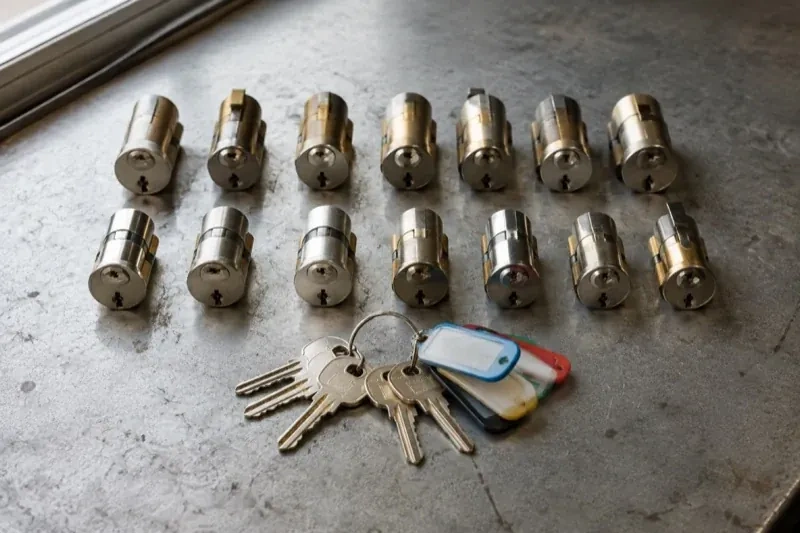
Two rows of lock cylinders on a metal surface with keys and colored key tags in front. — Master Key System Design, Claraday

Commercial · Claraday

Master Key System Design

A new hire at the shop gets handed whatever spare key happens to be in the drawer, and it turns out to open the stockroom, the back office and the safe room all at once. The owner realizes nobody actually decided who should open what.

In plain words

A property that expects to add doors, departments or locations benefits from a master key system built with room to grow. Master key system design accounts for that from the outset: the keying platform and combinations chosen leave spare capacity for realistic future openings, rather than filling every available combination on the first day. That way, a new office, a new hire, or a newly leased unit can usually be added to the existing chart instead of triggering a redesign of levels that are already in use elsewhere in the building.

Sound familiar?Claraday

The call
The new wing was built with its own brand of cylinder, so the two-year-old keys from the original building do not open a single door in the addition. Staff are now carrying two separate key rings just to move around one workplace.
NextHow the visit goes

Master Key System Design · Claraday

How the visit goes

Handheld diagnostic unit with a screen and buttons lying on a dirty car floor mat, cabled to a port under the dash. — Claraday
  1. Scene 1

    Who needs to open what

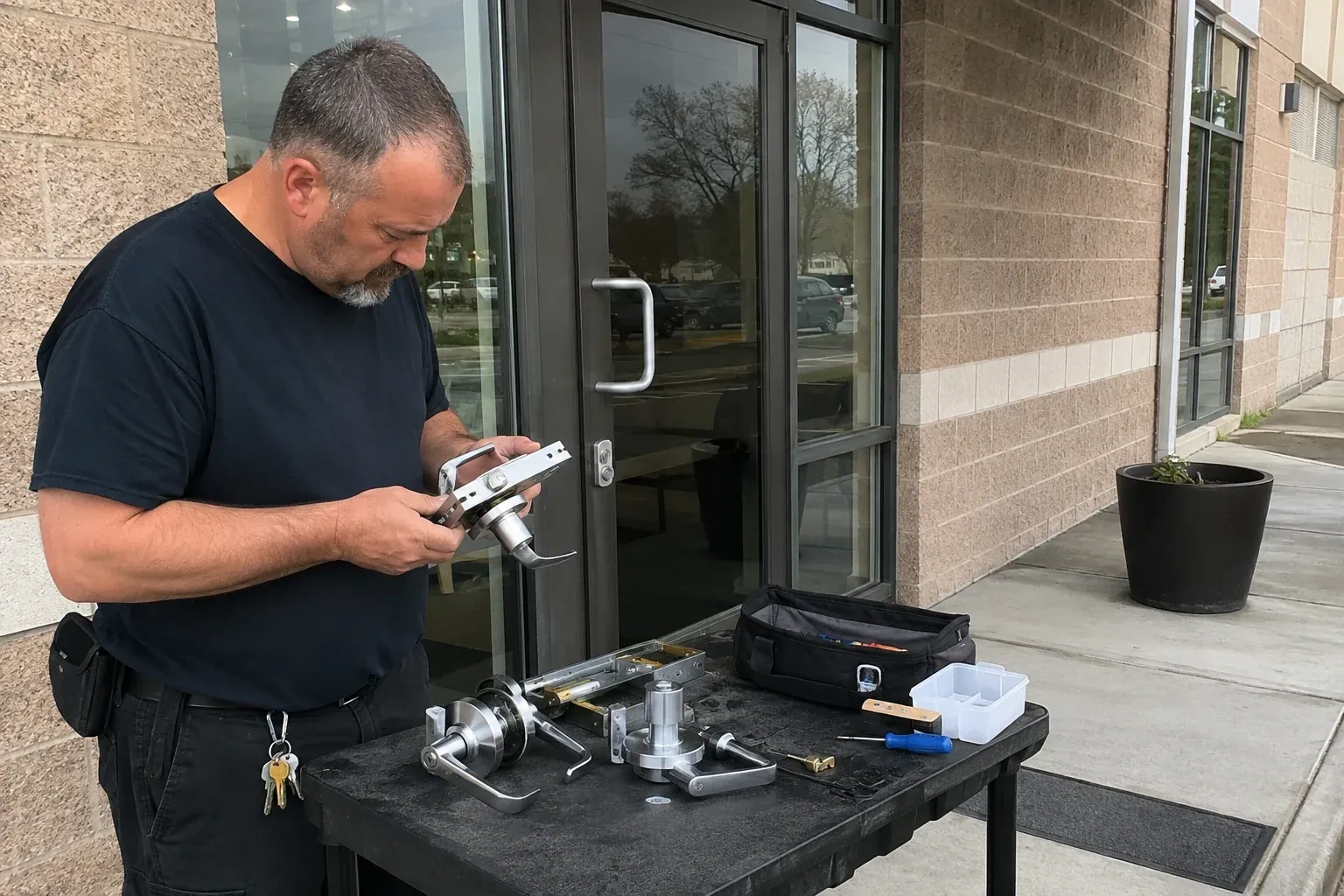
    Before any hardware is chosen, the locksmith records the organization's actual shape: which roles, departments or shifts need access to which doors, including exceptions such as a bookkeeper who needs the records room but not the loading dock. This map is built with the owner or manager, not guessed from existing keys, since existing keys often reflect years of ad hoc copying rather than any real plan. The output is a plain list of who should open what, which becomes the target the rest of the design is measured against, well before a single cylinder is touched or a key is cut.

  2. Scene 2

    Bringing electronic and mechanical access into one plan

    Where a property mixes mechanical cylinders with keypad or card-based doors, the mechanical hierarchy is designed to line up with the electronic access groups rather than run as a separate, unrelated system. A department that sits at one sub-master level on the mechanical side is kept at a matching level on any electronic doors it also uses, and any mechanical override cylinders behind an electronic lock are pinned into the same chart as every other door, so one document still describes the whole property.

  3. Scene 3

    A chart that answers the question on its own

    Once the project is finished, a single question, who can get into this room, has a single answer, visible on the chart without needing to track down whoever issued a key years ago. Every level is listed against the doors it opens and the people or roles holding it, so the record stays useful long after the locksmith has left, rather than fading into the same guesswork the project was meant to replace.

In the van

  • Compatible replacement cylinders
  • Cylinder decoders
  • Bench test fixture
  • Key marking tools
  • Cylinder pinning kit

What shapes the quoteAshburnham Lock Experts

Keyway chosen: standard or restricted
A restricted or patented keyway costs more in blanks and administration than a standard keyway, since duplication is controlled through the manufacturer's authorized record rather than cut anywhere. Higher-risk doors, such as records or cash rooms, often justify that additional control; lower-risk doors may not.
Administrator training and handover time
Walking the named administrator through the chart, the issuance process and how to handle a future lost key or new hire takes a defined amount of time on the day of handover, and a more detailed walkthrough for a larger, multi-level system takes longer than a simple one.
How many locations are involved
A single building is simpler to assess and pin than several sites intended to share related levels of access. Travel between locations, and keeping the hierarchy consistent across more than one property, both add to the overall scope of the project.

FeesSame any hour

Have it ready

Before you call · 0 / 3

(249) 494-7410

Questions we hear most

Who should hold the top-level master key?

As few people as the business can genuinely operate with. Every additional holder is another way a full-access key can be lost, borrowed or copied without anyone deciding that should happen. A useful test during design is asking, for each proposed holder, whether they need to open every single door on the property or only a defined group; the second answer usually points to a sub-master instead.

What happens if a department splits or a business reorganizes?

The existing chart is the starting point rather than a blank page. Doors that move to a new department are reassigned within the existing hierarchy where the cylinders and platform allow it, and only the affected levels are touched. A reorganization is usually an adjustment to the record, not a reason to rebuild the whole system from the ground up.

Can cleaners or contractors get limited access without a master key?

Yes. A change key or a narrow sub-master covering only the areas they service is the usual approach, rather than handing over a level that reaches further than the job requires. Where the property uses keypad or card access alongside mechanical keys, a time-limited or role-specific electronic credential can serve the same purpose without a physical key changing hands at all.

Claradayinformation

PeterboroughOntario

Town
Claraday, Peterborough
In business
27 years
Hours
Open 24/7
Nights, weekends and holidays, same fees
Visits
On-site assessment preferred. Request a visit or call.

2021 census: what it means at the door

Every square is one home in a hundred.

  • 64 in 100 homes · older homes
  • About 64% of homes in Peterborough were built in 1980 or earlier, according to the 2021 Census.Old brass keys wear thin, and a key that has bent for years finally lets go in a cold cylinder. In older housing stock this is a regular call, so the locksmith is ready to extract the piece, check the cylinder and cut a new key from the code.
  • Single-detached houses make up about 57% of homes in Peterborough (2021 Census).Where housing types are mixed, the same lost-key call means different things. In a house, rekey every door on the property. In an apartment, rekey the suite door and check with management about the common entrance. The locksmith asks which it is first.

Source: Statistics Canada, Census Profile

Open Claraday in Google Maps

On-site assessment

Request a visit.

A new hire at the shop gets handed whatever spare key happens to be in the drawer, and it turns out to open the stockroom, the back office and the safe room all at once.

(249) 494-7410, open 24/7.