Skip to content
AshburnhamLock ExpertsOpen 24/7 (249) 494-7410
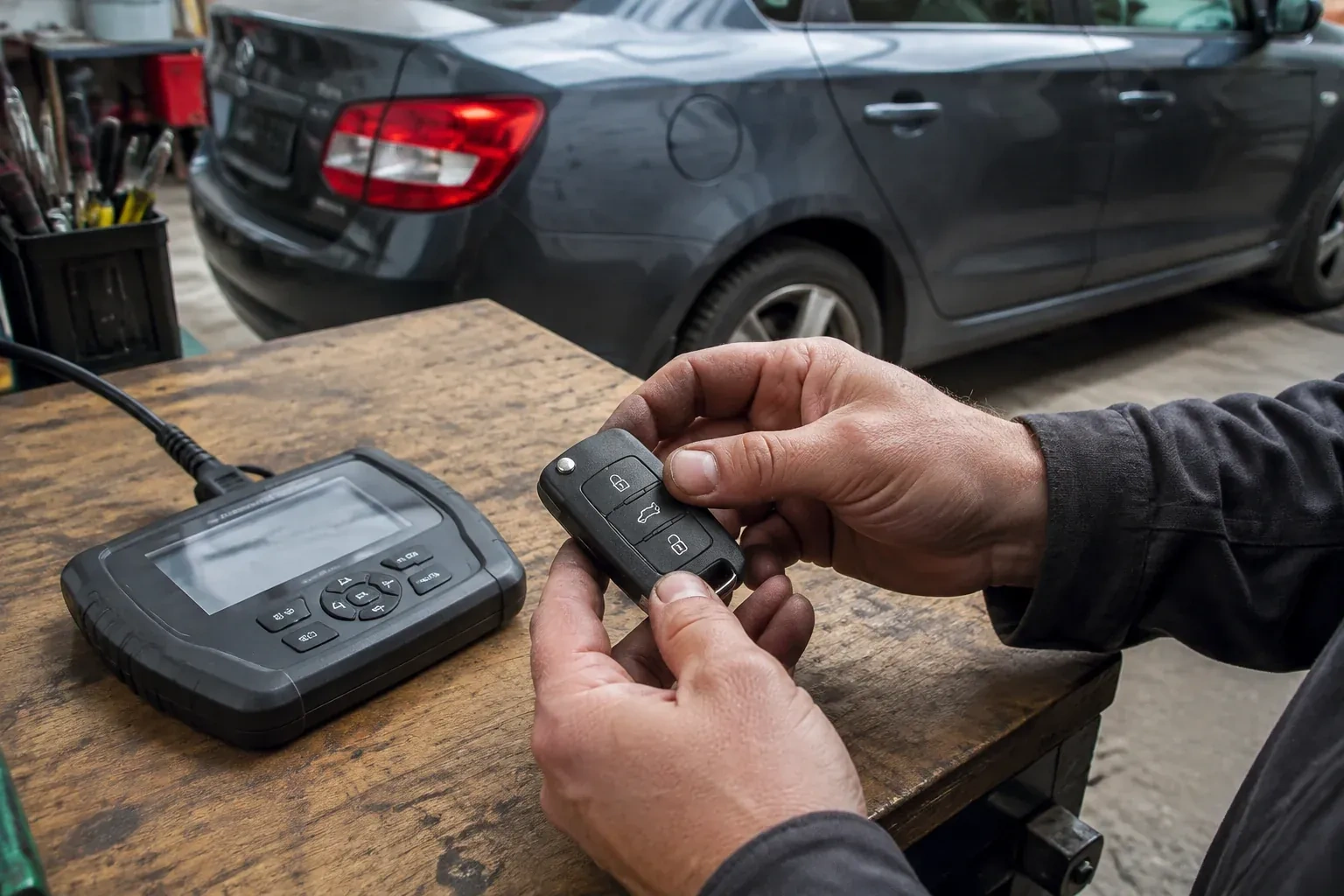
Hands holding a black car key fob above a workbench, beside a wired handheld device with a screen. — Car Key Replacement, Peterborough

Car keys · Peterborough

Car Key Replacement

The only key to the car went into the lake with the kayak. Now the car sits locked in the driveway with a full tank, and there is no spare in the house, in a coat pocket or anywhere else.

In plain words

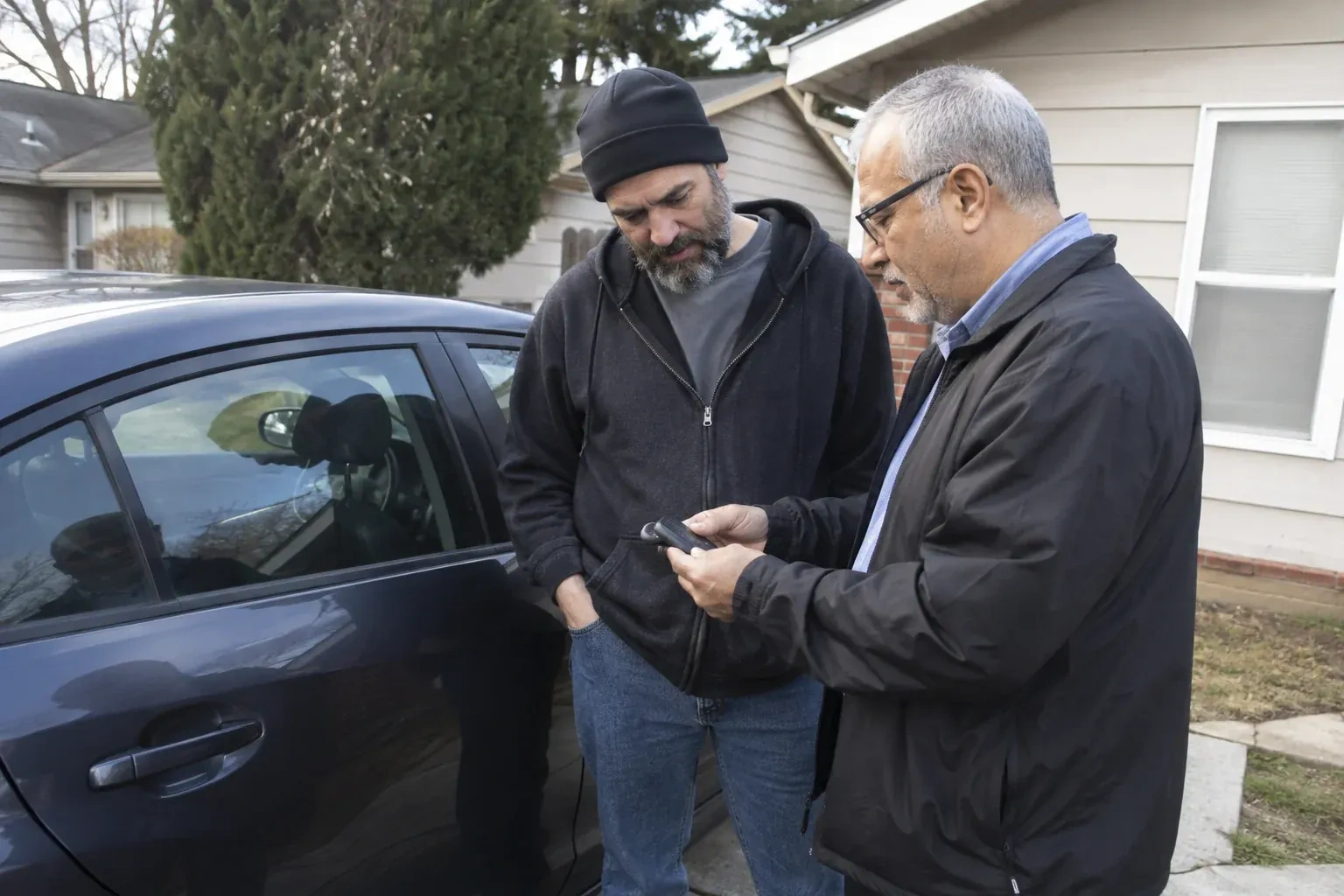
Most replacement keys are made where the car is parked. A mobile locksmith carries blanks, a cutting machine and programming equipment in the van, plugs into the diagnostic port and does the work on your driveway, in a parking garage or at the roadside. For most vehicles there is no need to move the car to a shop, and you watch the key cut and tested on the spot; a few systems still need a dealer or an equipped shop, flagged by the VIN check. The locksmith needs the vehicle's identity, proof of ownership, and what the old key could do, so the right parts are on board.

Sound familiar?Peterborough

The call
The engine cranks, catches for a second and dies, and a small key-shaped light keeps blinking on the dash. The blade turns the ignition and the doors perfectly well, but the car has stopped recognizing the chip inside the key.
NextHow the visit goes

Car Key Replacement · Peterborough

How the visit goes

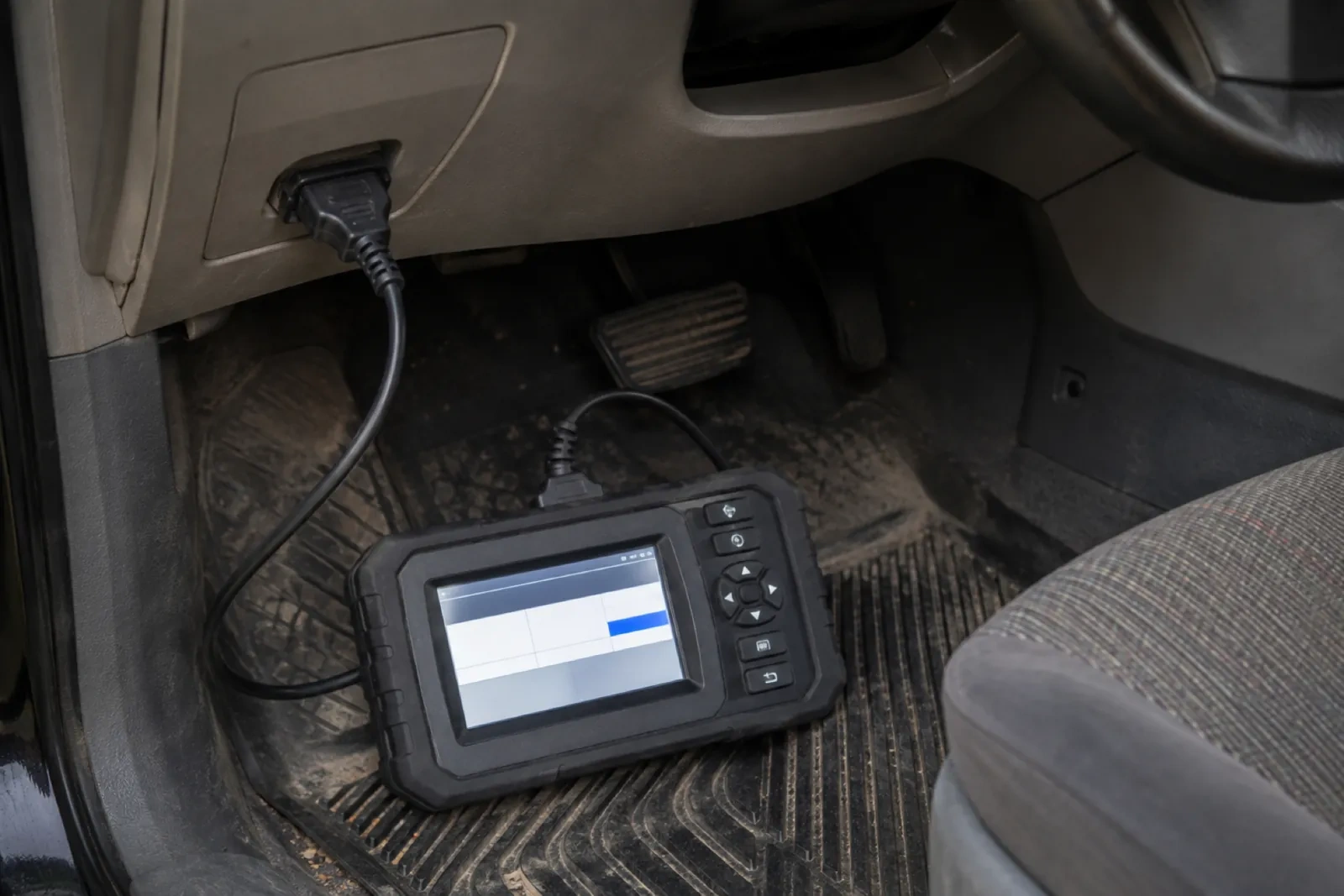
Handheld diagnostic unit with a screen and buttons lying on a dirty car floor mat, cabled to a port under the dash.
  1. Scene 1

    Reading the VIN for the key system

    The seventeen-character VIN tells the locksmith what kind of key the car was built with. From it, together with the year, make and model, comes the blade profile (a plain edge cut or an internal high-security cut), the transponder type and immobilizer generation, the remote's frequency and part number, and whether the car uses a proximity fob, or instead a phone-key or key-card system with no cut blade at all. This lookup happens before the visit so the correct blank, shell or fob is in the van, and it flags systems needing a security PIN, manufacturer data or a dealer procedure. A photo of the old key, if any survives, confirms the reading.

  2. Scene 2

    Testing every function before the handover

    The visit ends with a checklist rather than a handshake. The blade is tried in the driver's door, the passenger door and the trunk lock, and in the ignition where one exists. The engine is started, allowed to run, shut off and started again. Each button is pressed and watched: lock, unlock, trunk, panic, remote start. On a proximity car, the handles are approached with the fob in a pocket and the start button is tried the same way. The spare goes through the identical routine. Anything that stays silent is sorted out on the spot, and the tally of keys the car recognizes is written down for you.

  3. Scene 3

    Looking after the mechanical lock you rarely use

    On a keyless car the door cylinder can go years without a key in it, which is exactly why it seizes with salt and grit. After the visit, use the emergency blade in the driver's door once a season so the wafers keep moving, and follow the vehicle or lock maker's own maintenance instructions once the salt is off the roads in spring, since automotive locks more often need cleaning than added lubricant. In a cold snap, a small tube of lock de-icer in a coat pocket does the job; hot water only refreezes inside. A lock that has been freed during the visit stays free with this little attention.

In the van

  • Vehicle battery maintainer
  • Security PIN or secure-data access
  • Code-cutting machine
  • Remote frequency tester
  • OBD programming tool

What shapes the quoteAshburnham Lock Experts

How many keys you leave with
Each key is a blank, a cut and a programming slot, so the total follows the count. Making the spare during the same visit is usually the sensible time to do it.
Year, make and model
The vehicle decides the blank, the chip and the programming route. A twenty-year-old sedan with a plain transponder key and a recent proximity-start model are different jobs, and the quote follows the VIN rather than a flat figure.
Erasing the keys you no longer hold
Removing lost or stolen keys from the immobilizer during the session is a small extra step, and re-registering the keys you kept follows it. If you want the old keys silenced, say so and it is quoted.

FeesSame any hour

Have it ready

Before you call · 0 / 3

(249) 494-7410

Questions we hear most

My copied key opens the doors but the engine cuts out. Why?

The blade was copied but the chip was not. A hardware-store duplicate cut onto a plain blank has the right teeth, so it turns the locks and the ignition, yet the immobilizer hears no answer and shuts the engine off after a moment. The remedy is a proper transponder key: a blank with the correct chip, cut to your blade and programmed to the car, or a chip cloned from a working original.

Can you make a key for a car with push-button start?

On many vehicles, yes: a proximity fob is registered to the vehicle through the diagnostic port in much the same way as a transponder key, and then tested for passive entry at the handles and for starting with the fob in a pocket. Other systems pair a proximity fob through onboard, app-based or dealer-only steps instead. The emergency blade tucked inside the fob is cut to the door lock so you have a mechanical way in, and the VIN check reveals in advance which route a given vehicle needs.

The fob died in the cold. Is that a battery or the key?

Almost always the battery. Coin cells deliver less in deep cold, and a cell that was already weak goes quiet on the first bitter morning. Most cars still start with a flat fob if it is pressed to the start button or laid in a marked slot, and the emergency blade opens the door. Replace the cell, and if the fob stays silent with a fresh one, the remote board or a corroded contact is the next thing to look at.

Peterboroughinformation

PeterboroughOntario

Town
Peterborough
In business
27 years
Hours
Open 24/7
Nights, weekends and holidays, same fees
Visits
On-site assessment preferred. Request a visit or call.

2021 census: what it means at the door

Every square is one home in a hundred.

  • 64 in 100 homes · older homes
  • About 64% of homes in Peterborough were built in 1980 or earlier, according to the 2021 Census.Layers of paint build up on older doors and frames, and a lock that seemed to fail is sometimes a latch glued shut by the last coat. Part of the visit in an older area is freeing hardware, cleaning the edges and checking the door swings true.
  • Single-detached houses make up about 57% of homes in Peterborough (2021 Census).Where housing is mixed, the same street can hold a solid wood front door, a steel townhouse door and a metal-clad suite door. A locksmith fits each with hardware suited to its construction, so every neighbour ends up with a door that locks properly.

Source: Statistics Canada, Census Profile

Open Peterborough in Google Maps

On-site assessment

Request a visit.

The only key to the car went into the lake with the kayak.

(249) 494-7410, open 24/7.