Skip to content
AshburnhamLock ExpertsOpen 24/7 (249) 494-7410
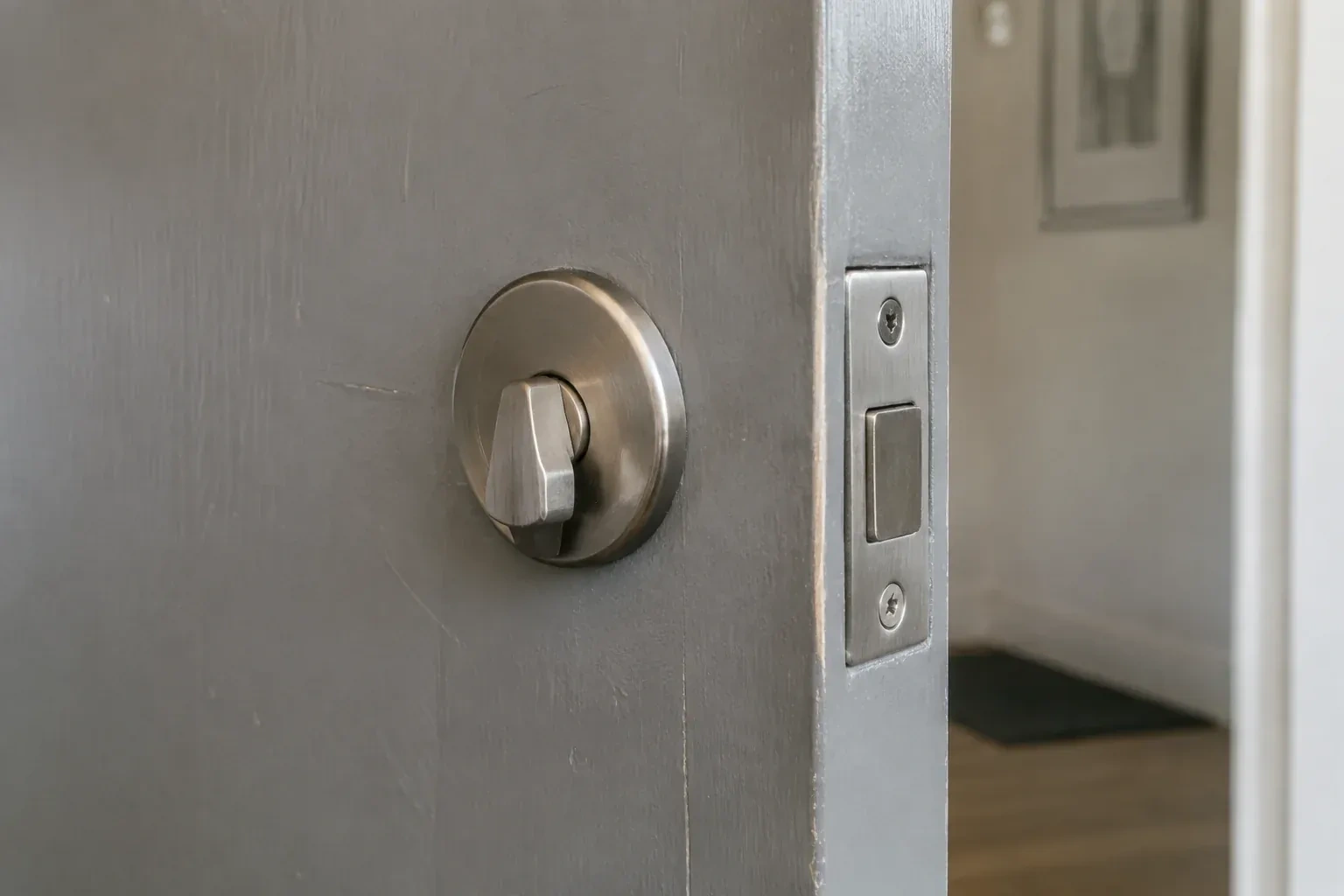
Close view of a satin-nickel deadbolt thumbturn and edge faceplate on a painted timber door. — Deadbolt Installation, Peterborough

Change or rekey · Peterborough

Deadbolt Installation

You bought a keypad deadbolt online and pulled the old one off, only to find the hole in the door is a different size and the bolt latch sits at a backset the new kit does not list. The door is now open and the box is on the counter.
In plain words

Replacing an existing deadbolt is usually a matter of matching rather than cutting. The locksmith measures the cross bore, the edge bore and the backset, checks the door thickness, and picks a bolt that drops into the holes you already have. Where the old lock was a builder-grade unit, the replacement can step up to a heavier grade with a hardened bolt, a free-turning collar around the cylinder and a low-profile face that gives a wrench nothing to grip. The old strike is checked against the new bolt's instructions, and where it calls for it, a reinforced strike and long screws go in while the door is already apart.

Sound familiar?Peterborough

The call
You bought a keypad deadbolt online and pulled the old one off, only to find the hole in the door is a different size and the bolt latch sits at a backset the new kit does not list. The door is now open and the box is on the counter.

NextHow the visit goes

Deadbolt Installation · Peterborough

How the visit goes

Handheld diagnostic unit with a screen and buttons lying on a dirty car floor mat, cabled to a port under the dash.
  1. Scene 1

    What the door is made of

    The first thing the locksmith reads is the door itself, because it decides how the holes get cut. A solid wood slab in a century home bores cleanly but can split at the edge if the mortise is rushed. A steel-clad insulated door has a thin metal skin over foam, sometimes with a wood block at lock height, and needs a metal-cutting hole saw run slowly. Fibreglass behaves like a hard plastic and chips if the bit grabs. Thickness matters too: most exterior doors are 44 mm, some older ones 35 mm, and the deadbolt's screws and collar have to suit that. Ten seconds with a tape and a knuckle on the face answer all of this.

  2. Scene 2

    Assembling the cylinder and thumb-turn

    The outside housing goes on first, with its tailpiece threaded through the slot in the bolt cam and its mounting posts through the matching holes. Any plastic alignment bracket that ships with the lock is used on a 54 mm bore and removed on a smaller one. The inside thumb-turn plate is set against the door and the two long tapered screws are driven through it into the outside housing, snug rather than crushed, so the housings pull tight to the door without distorting the mechanism. The locksmith turns the thumb-turn before the door is closed to confirm the bolt throws its full length and returns without a catch.

  3. Scene 3

    Keys that open what they should

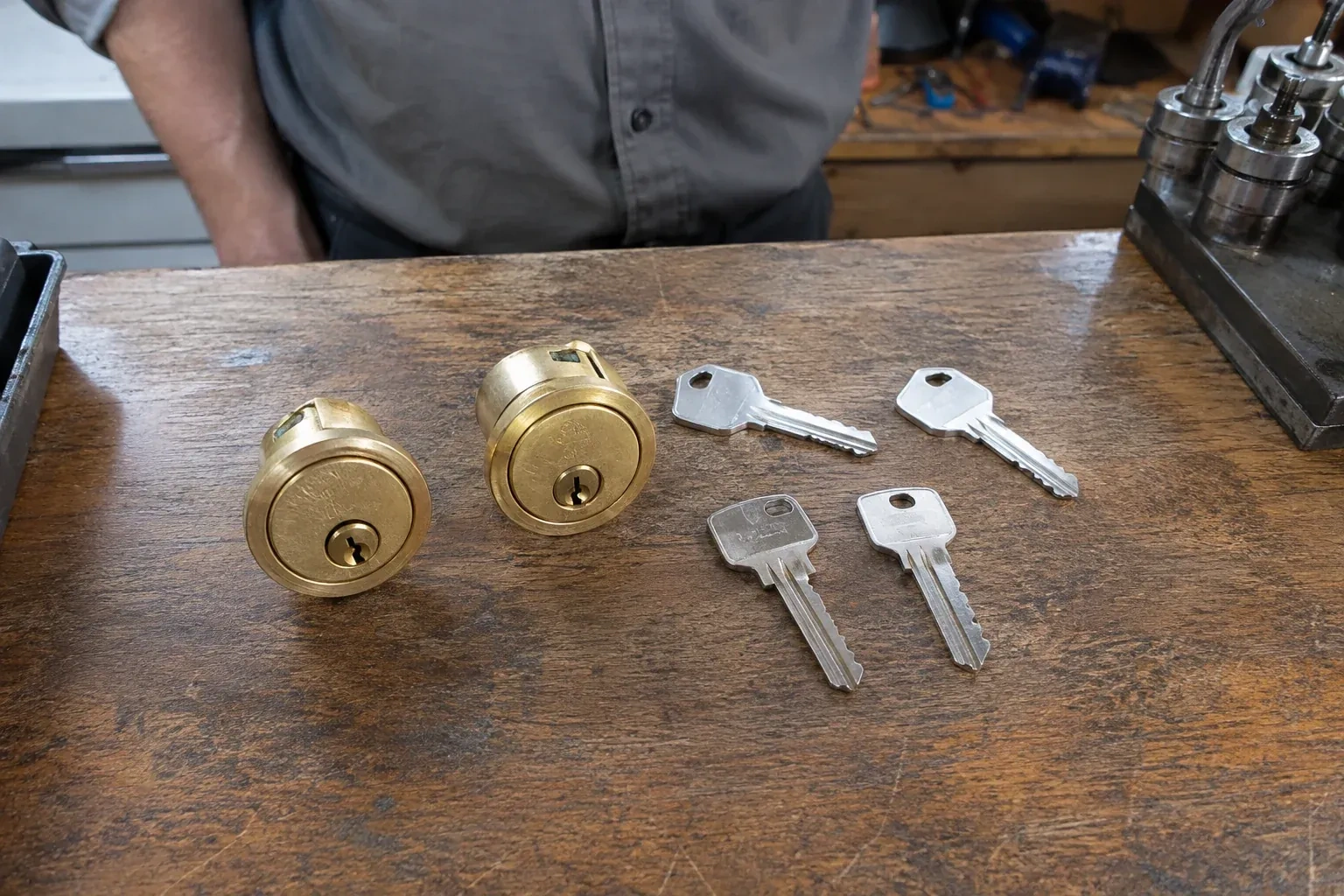
    You leave with the keys sorted, whichever way you chose. If the new cylinder was pinned to your existing key, every ring in the house still works and the new door has simply joined the set. If it was set to a fresh key, you have a small bundle of new keys, cut from the pins rather than copied from a worn original, and a clear idea of which old keys no longer matter. Count them, decide who carries one, and test each in the new bolt before the locksmith leaves. A spare kept with a trusted neighbour or in a small lockbox is worth arranging on the same afternoon.

In the van

  • Single-cylinder deadbolt
  • 25 mm auger bit
  • Boring jig and 54 mm hole saw
  • Bolt faceplate or drive-in collar
  • Dry PTFE lubricant

What shapes the quoteAshburnham Lock Experts

Number of doors
One front door is the simplest case. Front, back, side and garage-to-house doors done in one visit share the travel and setup, so the per-door figure usually eases as the count rises.
Removing and disposing of the old hardware
Some visits end with the old deadbolt and strike left with the homeowner, and others ask for it to be removed and hauled away. Taking the old hardware away adds a small amount of time and is agreed before the new deadbolt goes in.
Keying alike or a fresh key
Pinning the new cylinder to your existing key, or setting several doors to a new key, is bench work quoted per cylinder, plus the number of keys you ask to have cut.

FeesSame any hour

Have it ready

Before you call · 0 / 3

(249) 494-7410

Questions we hear most

I just moved in. Should the new deadbolt be keyed to a new key?

It is a good moment for it. Nobody knows how many copies of a previous owner's key exist, so pinning the new bolt, and the rest of the exterior doors, to one fresh key retires all of them at once. Lock manufacturers list a move as one of the main reasons to rekey. You come away with a known number of keys, each tested in every door it is meant to open.

What is the difference between a deadbolt and the lock in my door knob?

The knob or lever holds the door shut with a spring latch: a bevelled tongue that snaps into the frame and can be pushed back by anything slid into the gap. A deadbolt is a solid rectangular bar driven by the key or thumb-turn alone, and when fully thrown it locks in place so it cannot be pressed back from the edge. The knob keeps the door closed; the deadbolt keeps it locked.

Will drilling a new deadbolt damage my steel or fibreglass door?

Not when it is done for that door. Steel-clad doors are cut with a fine-toothed hole saw run slowly through the skin, guided by a jig so the saw cannot skate on the smooth face, and finished from both sides so each skin stays clean. Fibreglass is scored first so the surface does not chip. Shavings are vacuumed from the foam core, and the edge is finished with a collar or plate suited to the stile inside.

Peterboroughinformation

PeterboroughOntario

Town
Peterborough
In business
27 years
Hours
Open 24/7
Nights, weekends and holidays, same fees
Visits
On-site assessment preferred. Request a visit or call.

2021 census: what it means at the door

Every square is one home in a hundred.

  • 64 in 100 homes · older homes
  • About 64% of homes in Peterborough were built in 1980 or earlier, according to the 2021 Census.Layers of paint build up on older doors and frames, and a lock that seemed to fail is sometimes a latch glued shut by the last coat. Part of the visit in an older area is freeing hardware, cleaning the edges and checking the door swings true.
  • Single-detached houses make up about 57% of homes in Peterborough (2021 Census).Where housing is mixed, the same street can hold a solid wood front door, a steel townhouse door and a metal-clad suite door. A locksmith fits each with hardware suited to its construction, so every neighbour ends up with a door that locks properly.

Source: Statistics Canada, Census Profile

Open Peterborough in Google Maps

On-site assessment

Request a visit.

You bought a keypad deadbolt online and pulled the old one off, only to find the hole in the door is a different size and the bolt latch sits at a backset the new kit does not list.

(249) 494-7410, open 24/7.